Pollutant, or the gas of life?
Carbon dioxide is in every breath you breathe out, every leaf, every loaf of bread. Is it a danger to be cut, or food for a greener planet? Watch, look at the numbers, and decide for yourself.
The Truth about CO2
In this 5-minute video, Dr. Patrick Moore, a co-founder of Greenpeace who later left the group, argues that CO2 is not a pollutant but the basis of life on Earth, and that today’s level is low compared with most of Earth’s history. Press play, then read on to test the claims.
Video: “The Truth about CO2”, PragerU. The views are the speaker’s.
How a leaf turns air into food
Plants take in CO2 and water, and sunlight turns them into sugar and oxygen. That one trick feeds almost every living thing. More CO2 can mean more growth, and that is the heart of the “plant food” case.
How much CO2 is “a lot”?
Each bar shows parts per million (ppm) of CO2 in the air. Look at where today’s level sits between the ice-age low and the ancient past.
Rounded, widely quoted figures used in the video and in standard references; they are approximate and the ancient value varies by study. Verify with NOAA and geology sources.

A greener Earth then, a thinner one now?
Moore points out that CO2 has fallen over very long periods of time, and that at the last ice age low plants came close to running short. Life, he says, has more to fear from too little CO2 than too much.
“We are carbon-based life forms. CO2 is not our enemy. It is the building block of life.”
— the argument of the video (paraphrased)
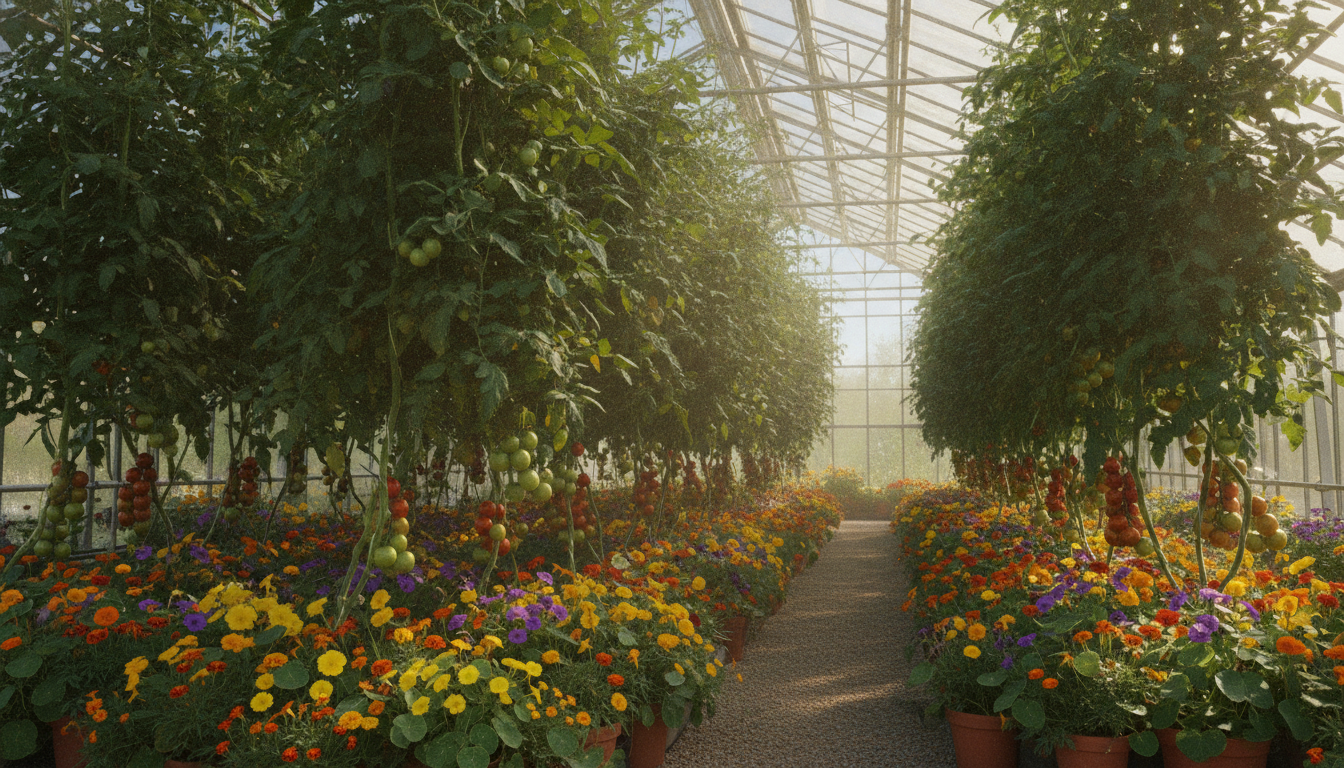
Growers already add CO2
Commercial greenhouses often raise CO2 to 1,000–1,500 ppm because tomatoes, cucumbers and flowers grow faster and bigger. This is a simple, real-world sign that plants like more CO2 than the open air gives them.
Satellite studies also show the Earth has become measurably greener since the 1980s, with higher CO2 as one of the causes.
What each side says
🌱 The “plant food” view
- CO2 is essential to photosynthesis and all food.
- Levels today are low compared with most of Earth’s history.
- Higher CO2 is greening deserts and boosting crop yields.
- Calling it a “pollutant” treats a gas of life like a poison.
- Energy that is cheap and abundant lifts people out of poverty.
🌡️ The mainstream climate view
- CO2 traps heat. Levels rose from about 280 to about 420 ppm since 1750, mostly from fossil fuels.
- Past high-CO2 eras had different oceans, coastlines and species, and change this fast is the concern.
- More CO2 can help plants, but heat, drought and floods can cancel the gain, and some crops carry fewer nutrients.
- “Pollutant” in law means a gas that harms health or welfare, not that it is poison to breathe.
- Most national science academies back this view.
What this means for energy
Cheap, reliable power feeds, heats and heals people. Policies should be tested against real costs.
Soot, smog and toxic waste are true pollutants. Tackle those with proven technology.
Nuclear, geothermal, hydrogen, nitrogen-based fuels and cleaner gas all deserve a fair shot.
Use open data and listen to both sides, as our Real Numbers rules ask.